Those of us who travel regularly know that the screening process is a standard part of the journey, but some of the horror stories shared over the years can raise the level of fear and cause angst. For this reason, I thought it was worth spending a day behind the scenes (from the other side of the scanner) with the Melbourne Airport Accessibility Working Group, to learn some tips in the hope that I could help to ease the process and raise concerns on behalf of our community. The working group’s purpose is to ensure the head of security and operations understands the needs of passengers with various kinds of disabilities. At the same time, the purpose of this working group was to provide some important suggestions for travellers.
As some of you may have noticed, body scanners (not x-ray technology for those of you who are interested) are slowly being phased in at airports across Australia. Body scanners should make the process for prosthetic users more streamlined as these devices detect any metal on the body. The screens that the security officers watch, clearly display a complete arm/leg or both if metal in nature, therefore it is quite easy to tell if a person is wearing a prosthetic device, which in turn, may avoid the need for any kind of physical pat down. Security operations are working to remove any form of physical contact by way of touch for travelling passengers.
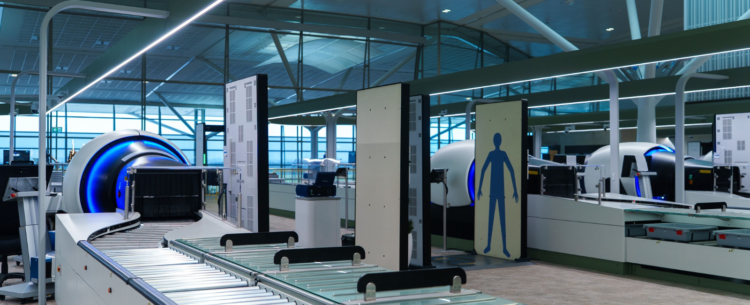
One important piece of advice, outlined by the head of security operations was to ‘communicate your position early’. For example, tell the security officer that you are wearing a prosthesis prior to approaching the security screening point, and stepping onto the body scanner.
Interesting fact!
One thing that I found to be quite interesting was learning that both airport security and the Australian Government send people through the scanners and through the security system carrying a range of prohibited items. They do this to ensure that staff are thorough and are picking up on items such as weapons, drugs, scissors etc. The federal government have different strategies than the local authorities and the security staff never actually know when this will happen and what the ‘item of the week,’ so to speak, will be. With that in mind, if you are going through security and a possible (but staged) breach had just taken place, then officers may be more alert than normal, resulting in overzealous searches and heightened attitudes!
Complaints
If you need to make a complaint, Rare Voices Australia have created a checklist that may help you. You may also wish to utilise their Airport Screening Notification Card when you're next travelling.
Keep up to date with our latest news, events and information